
This lemon Bundt cake is moist, tender, and infused with warm ginger for a bright citrus flavor. Fresh lemon juice and zest flavor the cake, grated ginger adds gentle warmth, and sour cream keeps the crumb soft for several days. A thick orange glaze provides a sweet, fresh finish.
Years ago, I tried a slice of lemon cake at a train station café in Germany and immediately fell in love with its rich citrus flavor and dense yet tender texture. When I returned home, I tried several different recipes, but they were either too fluffy, tasted too strongly of eggs, or simply were not what I remembered.
This version was my fourth attempt—and finally, it was exactly right. It is moist without being heavy, fragrant with lemon and ginger, and delicious enough to serve without frosting. The orange glaze, however, makes this lemon Bundt cake especially beautiful and gives it an additional layer of citrus flavor.
Why You’ll Love This Recipe
- Moist, tender crumb from full-fat sour cream
- Bright flavor from fresh lemon juice and zest
- A subtle warming note from fresh ginger
- Candied citrus peel adds flavor and texture
- Beautiful enough for holidays and special occasions
- Stays moist for several days
- Can be baked ahead and frozen
- Makes one large Bundt cake or two smaller cakes
Ingredients You’ll Need
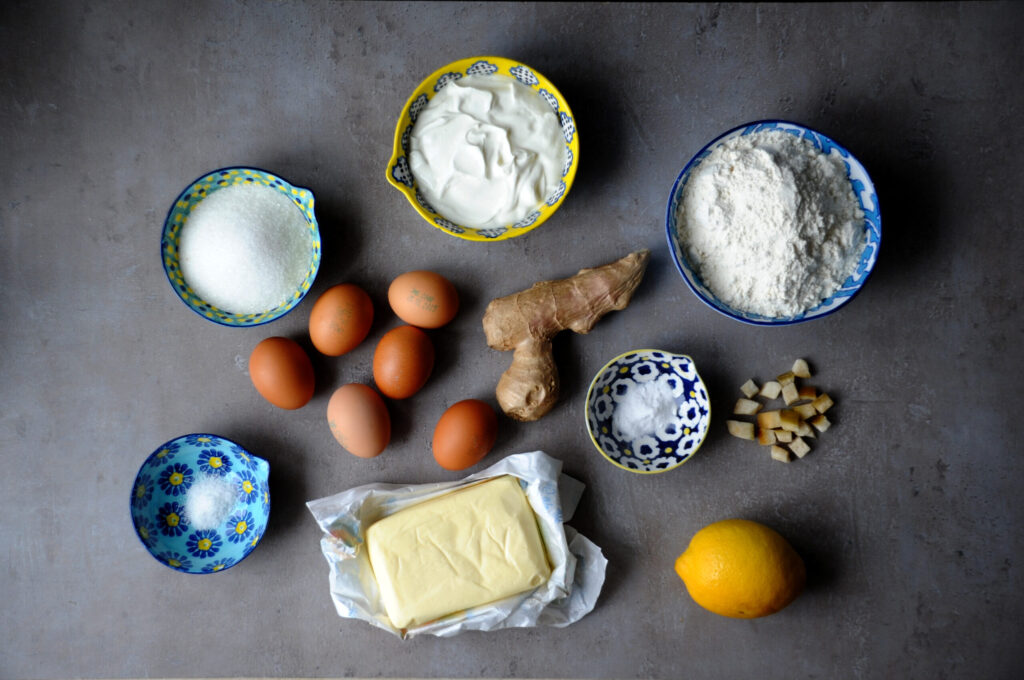
All-Purpose Flour
Measure the flour by spooning it into the measuring cup and leveling the top, rather than scooping it directly from the bag. Too much flour can make this lemon Bundt cake dry and heavy.
For the most accurate results, use a kitchen scale and measure 360 grams.
Butter
Use unsalted butter softened to room temperature. It should be soft enough to press with your finger but should not look melted or greasy.
Beating the butter and sugar together for several minutes creates a lighter, more tender cake.
Fresh Lemon
This recipe uses both lemon zest and lemon juice. Zest the lemons before squeezing them, removing only the yellow outer layer and avoiding the bitter white pith.
You will need approximately two medium lemons to produce two tablespoons of zest and ⅓ cup of juice.
Fresh Ginger
Freshly grated ginger gives the cake a gentle warmth that balances its sweetness. Peel the ginger and grate it finely so that it blends evenly into the batter.
Two tablespoons create a noticeable but not overpowering ginger flavor. Use slightly less if you prefer a milder cake.
Sour Cream
Full-fat sour cream adds moisture and gives this lemon Bundt cake a soft, rich crumb. Bring it to room temperature before mixing so that it incorporates evenly into the batter.
Plain full-fat Greek yogurt can be used as a substitute, although the finished texture and flavor may be slightly different.
Candied Citrus Peel
Chopped candied lemon or orange peel adds small bursts of concentrated citrus flavor throughout the cake.
Cut the peel into small pieces and toss it with a spoonful of the measured flour before folding it into the batter. This helps prevent the pieces from sinking to the bottom of the pan.
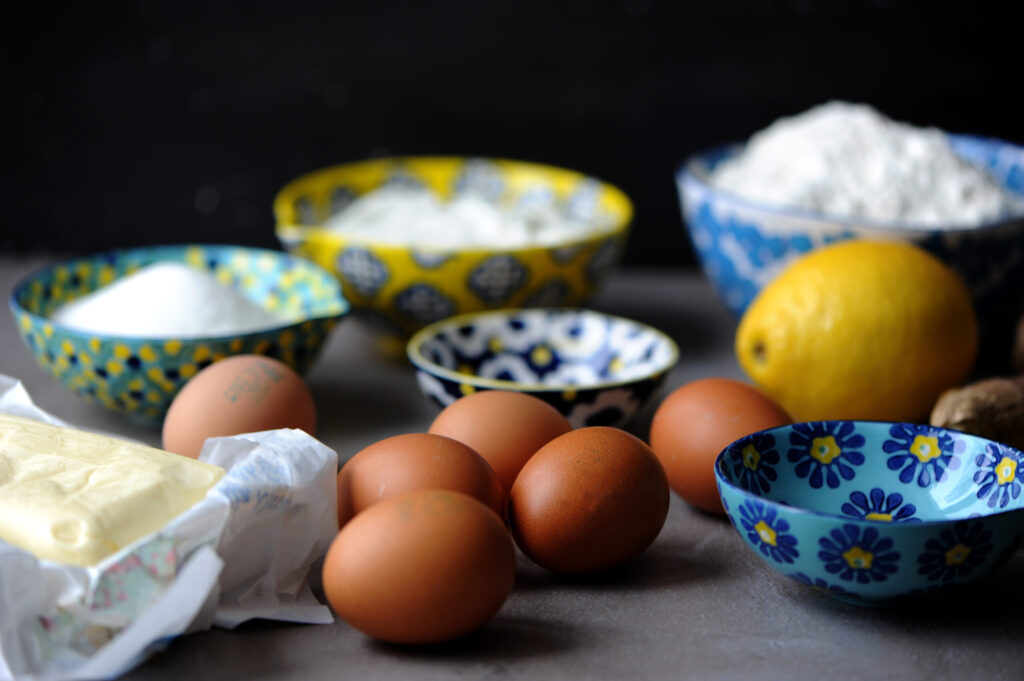
What Size Bundt Pan Should I Use?
The complete recipe fits one large 12-cup Bundt pan. Do not fill the pan more than approximately two-thirds to three-quarters full.
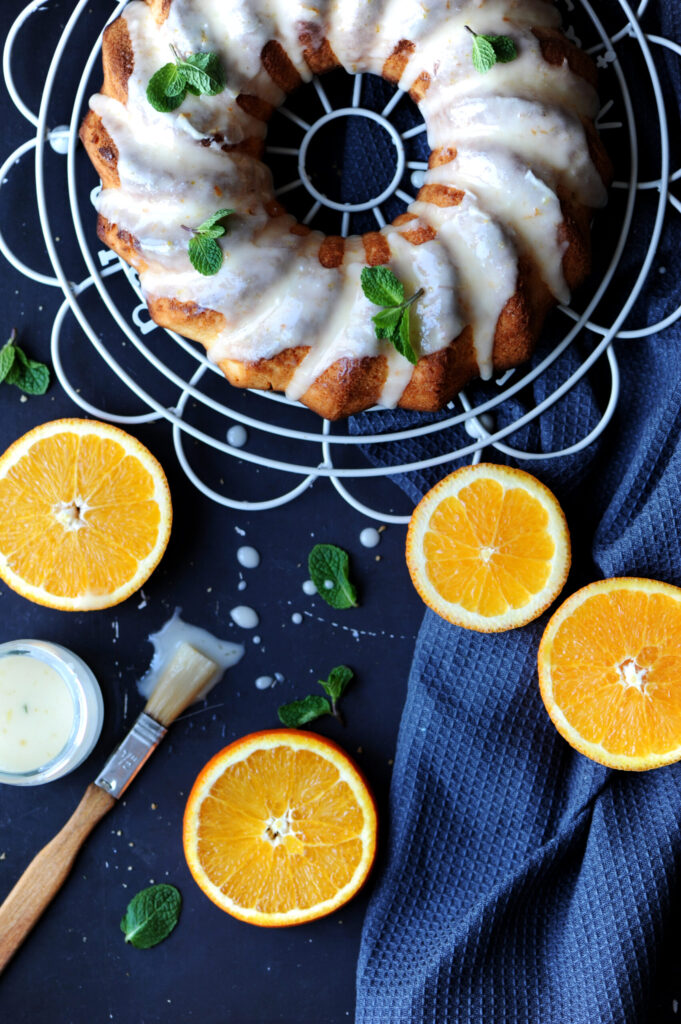
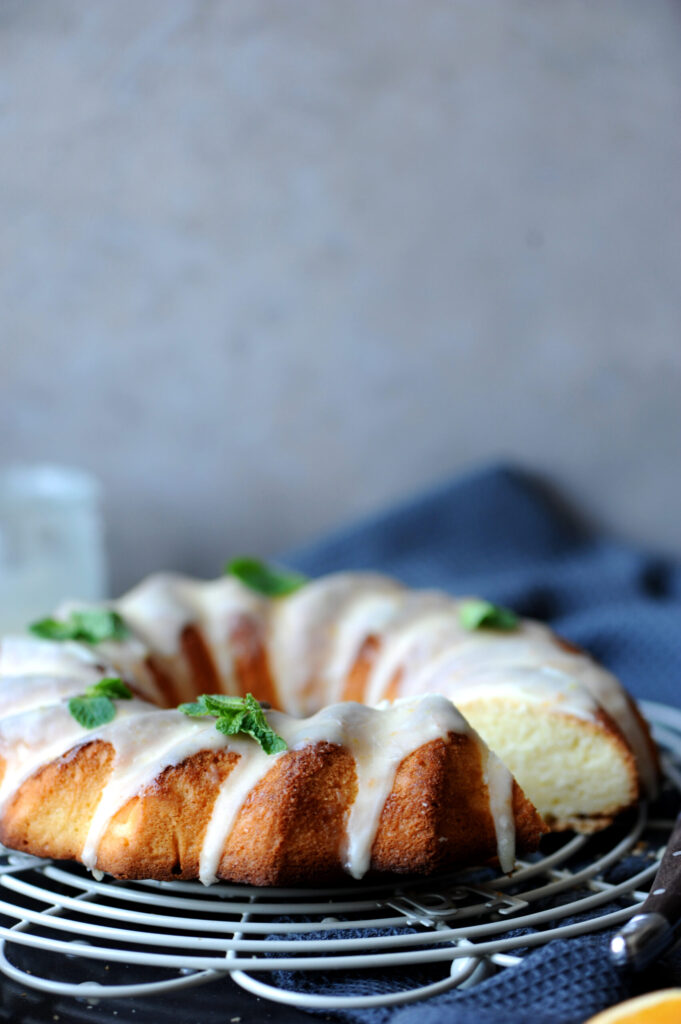
You can also divide the batter between two smaller 6-cup Bundt pans to make two smaller lemon Bundt cakes like the ones shown in the photographs. Smaller cakes will bake more quickly, so begin checking them after approximately 40 minutes.
Any extra batter can be baked in a small loaf pan or muffin cups.
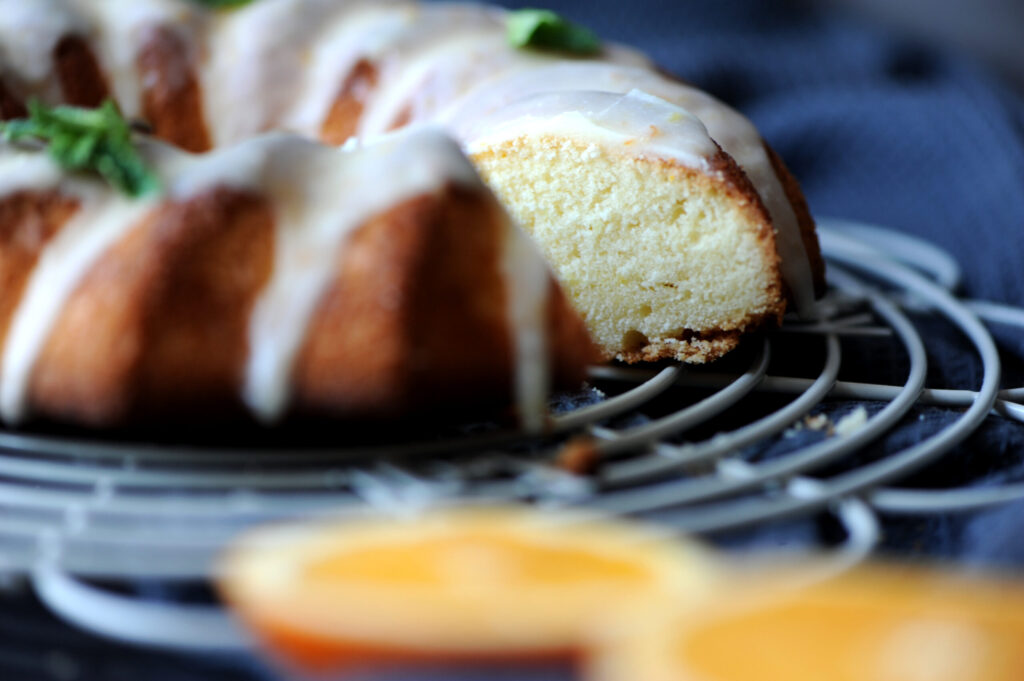
How to Prevent a Bundt Cake from Sticking
Bundt pans have many decorative curves where cake batter can stick. Grease every part of the pan generously with softened butter, including the center tube, and then dust it lightly with flour.
Turn the pan and tap it gently to distribute the flour, then shake out the excess.
A baking spray containing flour can also be used. Regular cooking spray may not provide enough protection for a detailed Bundt pan.
How to Make Lemon Ginger Bundt Cake
Prepare the Pan and Oven
Preheat the oven to 325°F for this lemon Bundt cake. Generously grease and flour a 12-cup Bundt pan, making sure to coat every curve and the center tube.
Combine the Dry Ingredients
In a medium bowl, whisk together the all-purpose flour, baking soda, and salt. Set the mixture aside.
Cream the Butter and Sugar
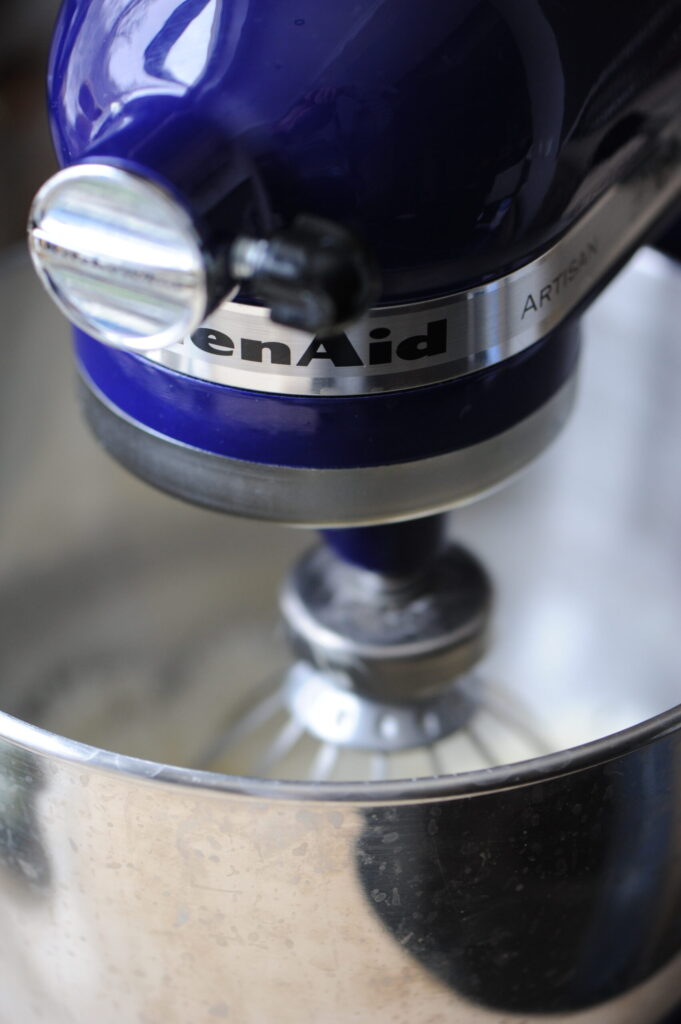
Place the softened butter, granulated sugar, and lemon zest in the bowl of a stand mixer fitted with the paddle attachment.
Beat at medium speed for approximately five minutes, stopping occasionally to scrape the bottom and sides of the bowl. The mixture should become noticeably lighter and fluffier.
Mix in the finely grated ginger.
Add the Eggs
Add the eggs one at a time, mixing well after each addition. Scrape the bowl periodically to make sure everything is evenly combined.
The eggs should be at room temperature. Cold eggs can cause the butter mixture to separate.
Add the Lemon Juice, Flour, and Sour Cream
Mix in the fresh lemon juice. The mixture may look slightly curdled at this stage, which is normal.
With the mixer running on low speed, add the flour mixture in three additions, alternating with the sour cream. Begin and finish with the flour.
Mix only until the last streaks of flour disappear. Overmixing after adding the flour can make the cake dense or tough.
Fold in the Candied Citrus Peel
Toss the chopped candied peel with approximately one tablespoon of the measured flour, then gently fold it into the batter with a spatula.
Bake the Cake
Transfer the batter to the prepared Bundt pan and smooth the top.
Bake for approximately 50–60 minutes, or until the cake is golden and a wooden skewer test inserted into the thickest part comes out clean or with a few moist crumbs.
If using two smaller Bundt pans, begin checking the cakes after 40 minutes.
Cool and Remove from the Pan
Let the cake cool in the pan for approximately 15 minutes. Carefully run a thin, flexible spatula around any accessible edges without scratching the pan.
Place a cooling rack over the Bundt pan and invert both together. Lift the pan away gently.
Allow the cake to cool completely before adding the glaze.
How to Make Orange Glaze
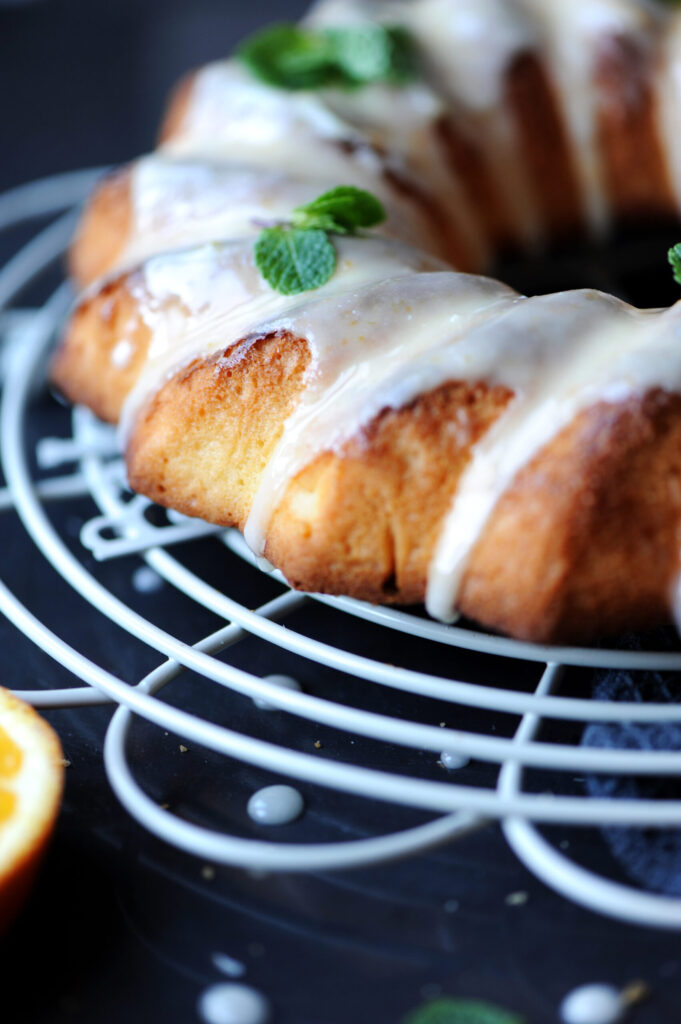
Place the powdered sugar in a medium bowl. Add three tablespoons of freshly squeezed orange juice and whisk until smooth.
Continue adding orange juice approximately one teaspoon at a time until the glaze is thick but pourable. It should slowly fall from the spoon and remain visible on the surface of the cake rather than immediately running off.
If the glaze becomes too thin, whisk in additional powdered sugar.
Spoon the glaze over the completely cooled cake, allowing it to run naturally down the sides. Decorate with fresh mint, finely grated orange zest, or small pieces of candied citrus peel.
Tips for the Best Lemon Bundt Cake
- Bring the butter, eggs, and sour cream to room temperature before mixing.
- Zest the lemons before squeezing out the juice.
- Cream the butter and sugar for the full five minutes.
- Add the eggs individually rather than all at once.
- Use freshly grated ginger for the brightest flavor.
- Do not overmix the batter after adding the flour.
- Grease every curve of the Bundt pan carefully.
- Fill the pan no more than three-quarters full.
- Cool the cake for about 15 minutes before turning it out.
- Wait until the cake is completely cool before adding the glaze.
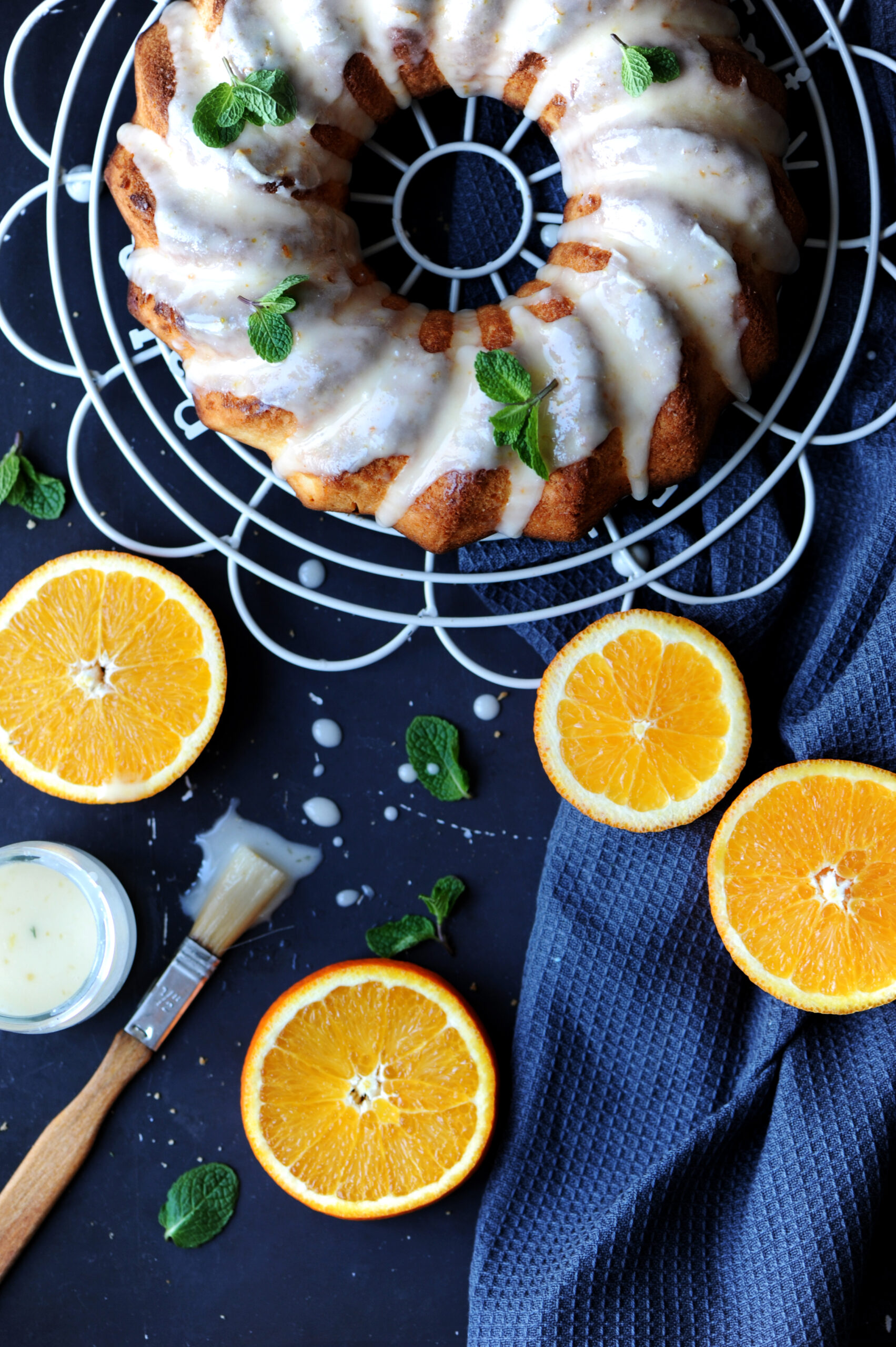
Lemon Ginger Bundt Cake with Orange Glaze
Ingredients
Method
- Preheat the oven to 325°F. Generously grease and flour a 12-cup Bundt pan, coating every curve and the center tube.
- In a medium bowl, whisk together the flour, baking soda, and salt.
- In the bowl of a stand mixer fitted with the paddle attachment, beat the softened butter, sugar, and lemon zest at medium speed for approximately five minutes, until light and fluffy. Scrape down the bowl as needed.
- Mix in the finely grated fresh ginger.
- Add the eggs one at a time, mixing well after each addition and scraping down the bowl periodically.
- Mix in the fresh lemon juice. The mixture may appear slightly curdled, which is normal.
- With the mixer on low speed, add the flour mixture in three additions, alternating with the sour cream. Begin and finish with the flour. Mix only until combined.
- Toss the chopped candied citrus peel with approximately one tablespoon of the measured flour. Fold it gently into the batter.
- Transfer the batter to the prepared Bundt pan and smooth the top. Do not fill the pan more than three-quarters full.
- Bake for 50–60 minutes, or until golden and a wooden skewer inserted into the thickest part comes out clean or with a few moist crumbs.
- Cool the cake in the pan for 15 minutes. Invert it onto a wire rack and allow it to cool completely.
- To make the glaze, place the powdered sugar in a bowl. Whisk in three tablespoons of orange juice. Add more juice one teaspoon at a time until the glaze is thick but pourable.
- Spoon the orange glaze over the completely cooled cake. Decorate with orange zest, candied citrus peel, or fresh mint if desired.
Notes
- The batter fits one 12-cup Bundt pan or two smaller 6-cup pans.
- If using smaller pans, begin checking the cakes after approximately 40 minutes.
- Room-temperature ingredients blend more evenly and create a smoother batter.
- Do not overmix after adding the flour.
- The glaze should be applied only after the cake has cooled completely.
- Store covered at room temperature for up to three days or refrigerated for up to five days.
- Freeze the unglazed cake for up to three months.
- Nutrition information is an estimate and will vary according to the glaze and number of slices.
Variations
Lemon-Only Glaze
Replace the orange juice with fresh lemon juice for a sharper and more intensely lemony finish.
Orange and Lemon Glaze
Use equal parts fresh orange and lemon juice for a balanced sweet-tart glaze.
Without Candied Peel
The cake can be made without candied citrus peel. Leave it out without changing the quantities of the other ingredients.
Two Smaller Bundt Cakes
Divide the batter evenly between two greased and floured 6-cup Bundt pans. The smaller cakes are wonderful for gifting.
More Easy Cake Recipes
If you enjoy simple homemade cakes, try my Fresh Apricot Cake with Oat and Rice Flour, Peach Upside-Down Cake with Poppy Seeds and Cinnamon, or rich Chocolate Almond Loaf Cake.
How to Store Lemon Bundt Cake
Store this lemon Bundt cake covered at room temperature for up to three days. Because the cake contains sour cream, it remains pleasantly moist rather than drying out quickly.
For longer storage, refrigerate the lemon Bundt cake in an airtight container for up to five days. Bring individual slices to room temperature before serving for the best flavor and texture.
Can I Freeze This Cake?
Yes. For the best results, freeze the cake before adding the orange glaze.
Wrap the completely cooled cake—or individual slices—tightly in plastic wrap and place it in a freezer-safe container. Freeze for up to three months.
Thaw the cake overnight in the refrigerator or for several hours at room temperature. Add the fresh orange glaze after the cake has completely thawed.
Frequently Asked Questions
Why did my Bundt cake stick to the pan?
The most common cause is missing a small area while greasing the detailed pan. Coat every curve with softened butter or baking spray containing flour.
The cake may also stick if it remains in the pan until completely cold. Let it rest for approximately 15 minutes before turning it out.
Can I use ground ginger instead of fresh ginger?
Fresh ginger provides the best flavor. If necessary, replace the two tablespoons of fresh ginger with approximately 1½ teaspoons of ground ginger.
Ground ginger has a warmer, more concentrated flavor, so the result will not taste exactly the same.
Can I substitute Greek yogurt for sour cream?
Yes. Use one cup of plain full-fat Greek yogurt. The cake may be slightly less rich but should remain moist and tender.
Why did my orange glaze disappear into the cake?
The cake may have been warm, or the glaze may have contained too much orange juice. Allow the cake to cool completely and add the juice to the powdered sugar gradually.
How do I know when the cake is done?
Insert a long wooden skewer into the thickest part of the cake. It should come out clean or with a few soft crumbs, but not with wet batter.
Avoid overbaking, as this can dry out the edges before the center finishes baking.
Serving Suggestions
Serve this lemon ginger Bundt cake with coffee, black tea, or a cup of Earl Grey. Its bright citrus flavor also makes it a lovely dessert for Easter, Mother’s Day, Christmas brunch, or an afternoon gathering.
The cake is flavorful enough to enjoy on its own, but fresh berries or a spoonful of lightly sweetened whipped cream can make each slice feel even more special.