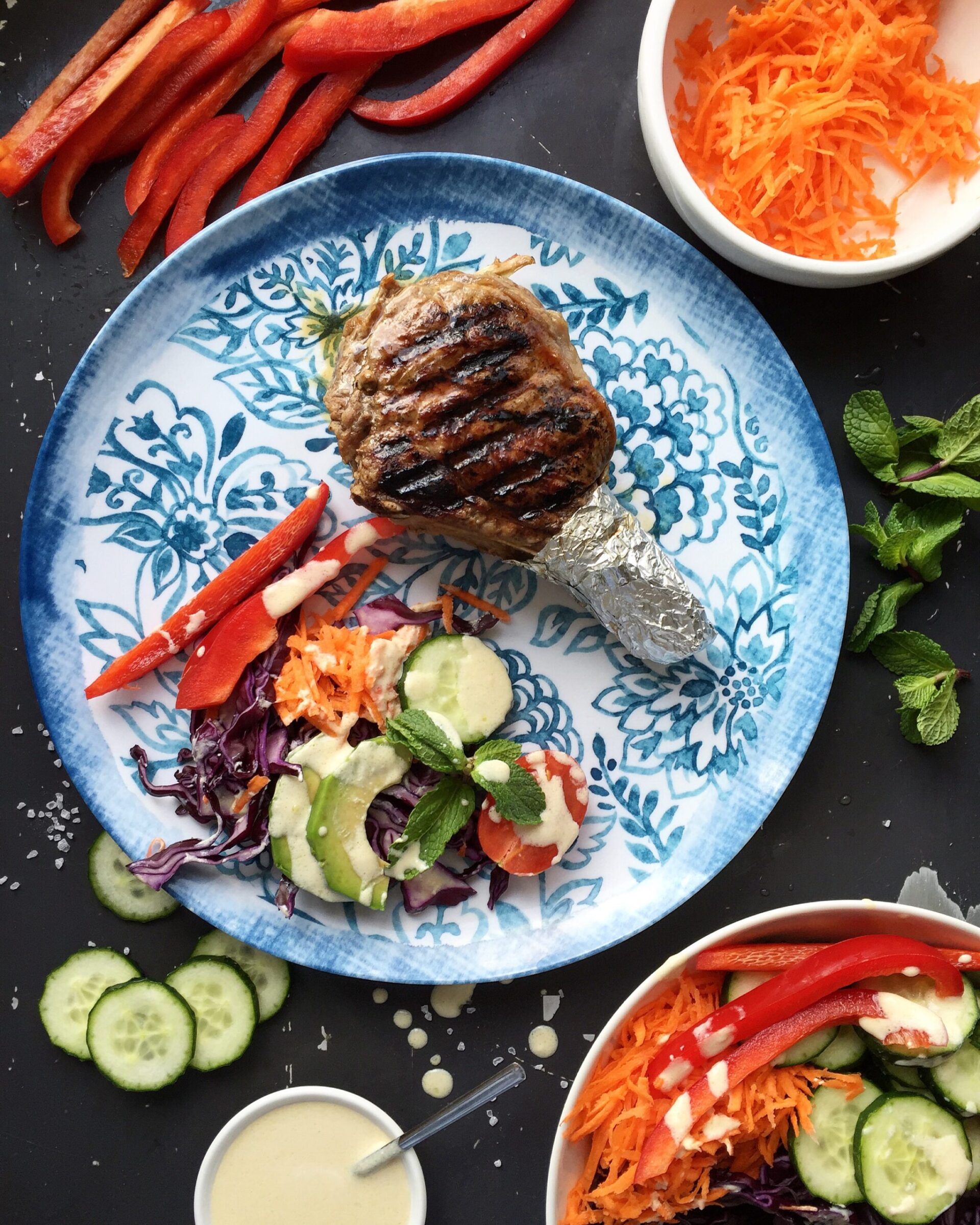
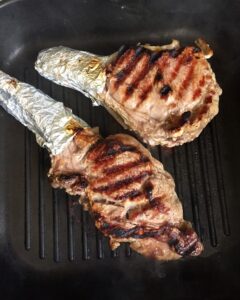
This pan-seared bone-in steak is cooked using one of my favorite methods for thick cuts of beef. The steaks are first seared in a very hot grill pan to create a flavorful browned crust and beautiful grill marks, then finished gently in the oven until they reach the desired internal temperature.
Searing the meat before transferring it to the oven gives you the best of both cooking methods. The hot pan develops color and flavor on the outside, while the steady heat of the oven cooks the thick center more evenly. It is a simple technique that works especially well for bone-in ribeye, cowboy steak, and smaller tomahawk-style steaks.
The ingredient list is intentionally short. Good steak does not need a complicated marinade—olive oil, kosher salt, and freshly ground black pepper are enough to enhance the natural beef flavor.
Serve the steak with roasted potatoes, mashed potatoes, grilled vegetables, or my colorful Rainbow Vegetable Salad Bowl with Avocado and Hummus Dressing for a fresh and satisfying dinner.
Why You’ll Love This Bone-In Steak Recipe
- It requires only four basic ingredients.
- Searing creates a flavorful browned crust.
- Finishing the steak in the oven helps thick cuts cook more evenly.
- A meat thermometer removes the guesswork.
- The recipe works for bone-in ribeye, cowboy steak, or tomahawk-style steak.
- It is easy enough for dinner at home but impressive enough for guests.
Ingredients You’ll Need
Bone-in steaks
Choose thick bone-in ribeye, cowboy, or tomahawk-style steaks. Steaks approximately 1½ to 2 inches thick work especially well with the pan-to-oven method.
The cooking time will vary depending on the thickness of the steaks, their starting temperature, and the type of pan you use. This is why checking the internal temperature is more reliable than following an exact number of minutes.
Olive oil
A light coating of olive oil helps the seasoning adhere and encourages browning. You can also use avocado oil or another neutral high-heat cooking oil.
Kosher salt
Salt enhances the flavor of the beef and helps create a well-seasoned crust. Season both sides and the edges of each steak.
Black pepper
Freshly ground black pepper adds mild heat and complements the rich flavor of the beef.
Do You Need to Age Vacuum-Packed Steak at Home?
You do not need to keep a packaged steak in the refrigerator for an additional five days to make it tender.
Keep the meat refrigerated at 40°F or below and follow the use-by date and storage instructions printed on its packaging. Once opened, cook the steak within the recommended refrigerated storage period or freeze it.
According to USDA guidance, fresh beef steaks can generally be refrigerated for three to five days. This is a food-storage limit, not a recommendation to deliberately age the meat at home.
Why Sear Steak Before Putting It in the Oven?
A hot pan quickly browns the surface of the meat through the Maillard reaction, producing the deep savory flavor associated with a well-cooked steak.
The oven then surrounds the steak with steady heat, allowing the thick center to cook more evenly. This method is particularly useful for steaks that are too thick to cook entirely in a skillet without burning the exterior.
How to Make Pan-Seared Bone-In Steak
1. Preheat the oven
Preheat the oven to 400°F. Place an oven-safe grill pan or cast-iron skillet over medium-high to high heat.
If your pan is not oven-safe, place a rimmed baking sheet or baking dish in the oven so it is already hot when the steaks are transferred.
2. Prepare the steaks
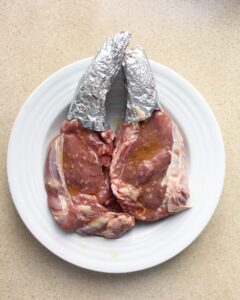
Remove the steaks from their packaging and pat them thoroughly dry with paper towels. Moisture on the surface can prevent proper browning.
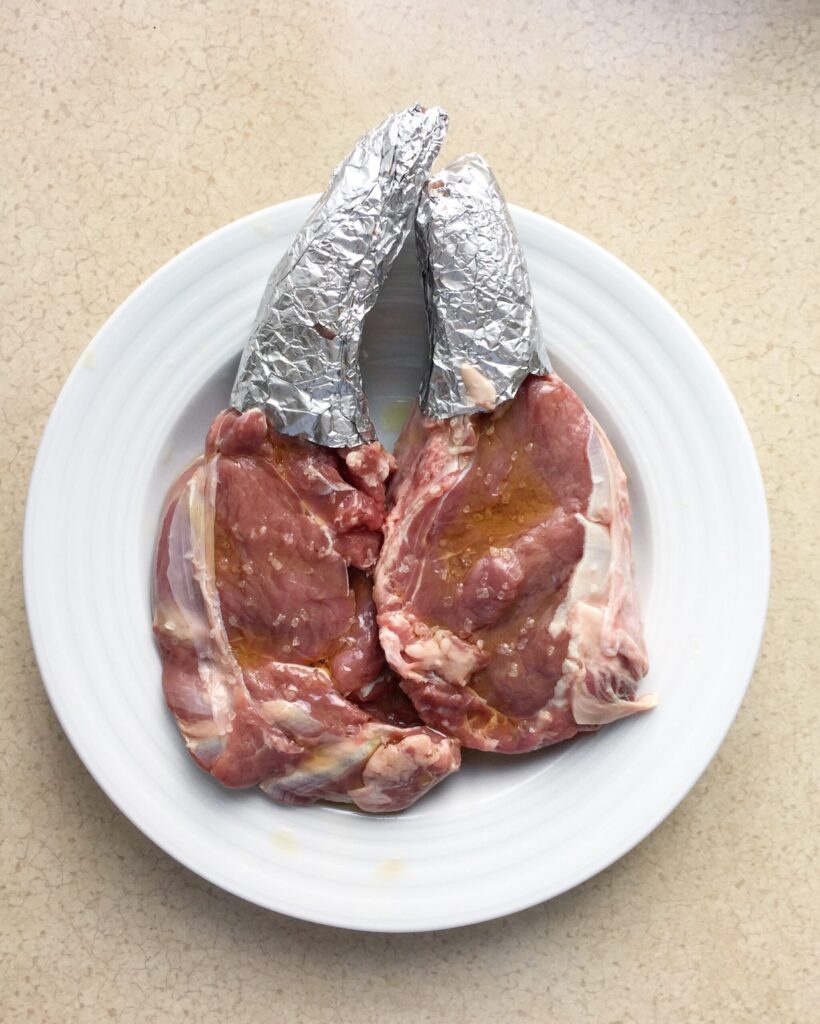
Rub the steaks with olive oil and season generously on both sides and around the edges with kosher salt and black pepper.
If the steaks have long exposed bones, wrap only the ends of the bones in small pieces of aluminum foil to keep them from becoming overly dark. Do not wrap the meat itself.
3. Sear the steaks
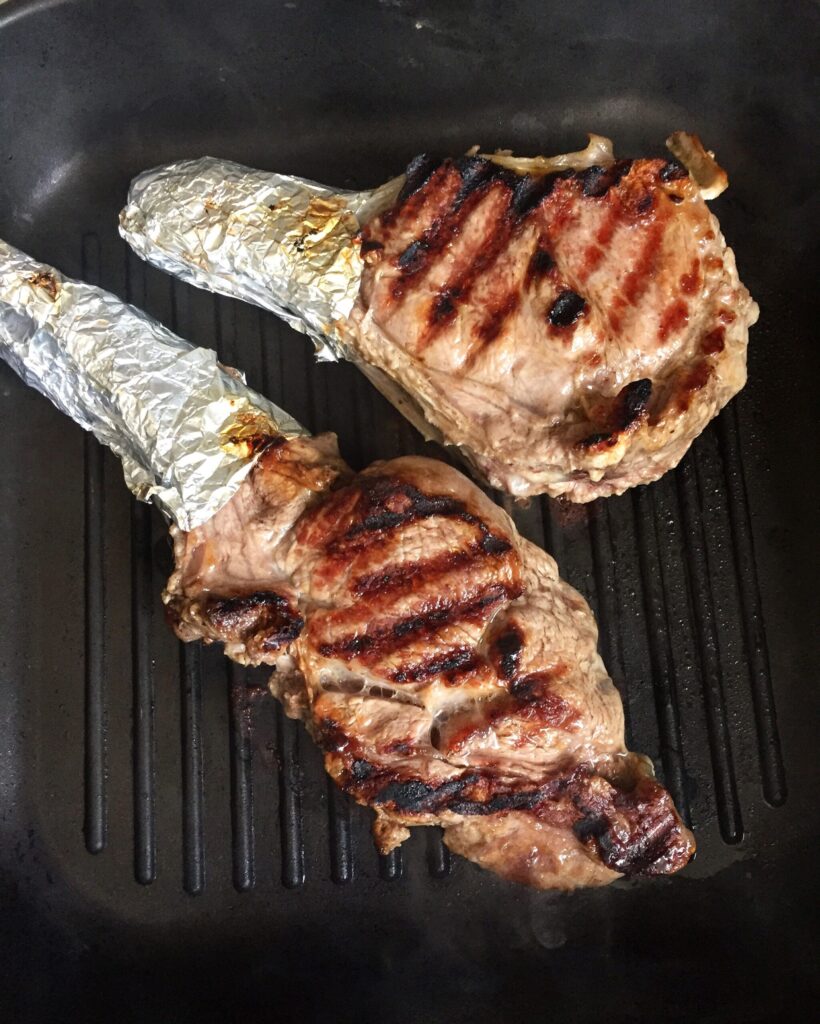
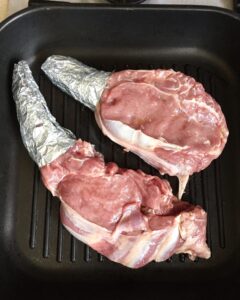
Place the steaks in the hot pan, leaving space between them. Sear without moving for 3–4 minutes, or until a dark brown crust forms.
Turn and sear the second side for another 2–3 minutes. If the steaks have a thick fat cap, use tongs to hold the fatty edge against the pan for approximately 30–60 seconds.
4. Finish in the oven
Transfer the oven-safe pan holding the pan-seared bone-in steak directly to the preheated oven. If the pan is not oven-safe, carefully move the steaks to the preheated baking sheet or baking dish.
Cook the pan-seared bone-in steak for approximately 5–12 minutes, beginning to check early. Very thick steaks may need several additional minutes.
Insert an instant-read thermometer horizontally into the thickest part of the pan-seared bone-in steak without touching the bone. For food safety, the USDA recommends cooking whole beef steaks to an internal temperature of at least 145°F.
5. Rest before serving
Transfer the steaks to a clean plate or cutting board. Tent them loosely with foil and allow them to rest for 5–10 minutes.
Resting gives the juices time to redistribute through the meat. Cutting into the steak immediately can cause more juice to run onto the plate instead of remaining inside the meat.
How Long Does Steak Take in the Oven?
Oven time depends on several factors:
- The thickness of the steak
- Whether the steak is bone-in or boneless
- Its temperature before cooking
- How long it was seared
- The type and weight of the pan
- The accuracy of your oven
After searing, start checking the pan-seared bone-in steak after approximately five minutes. A thermometer provides a much more dependable result than cooking by time alone.
Tips for the Best Pan-Seared Steak
- Pat the meat dry. A dry surface browns more effectively.
- Preheat the pan thoroughly. The steak should sizzle as soon as it touches the surface.
- Do not overcrowd the pan. Cook the steaks separately if your pan is too small.
- Avoid moving the steaks too soon. Allow the first side to develop a proper crust before turning.
- Use tongs instead of a fork. Piercing the meat can allow juices to escape.
- Check the temperature away from the bone. Bone can affect the thermometer reading.
- Do not cover the meat tightly in the oven. Trapped steam will soften the browned crust.
- Always let the steak rest. Even five minutes makes a noticeable difference.
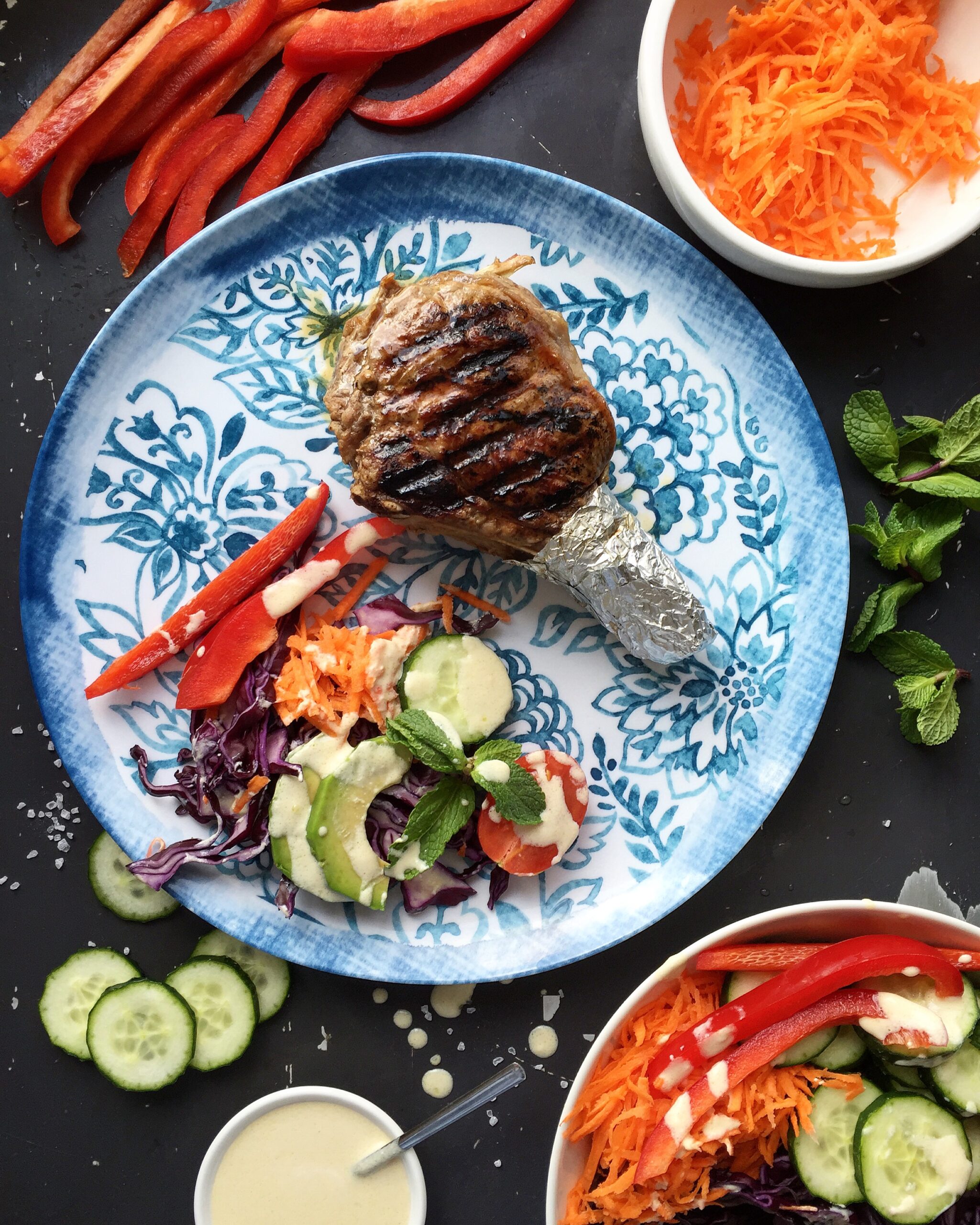
Pan-Seared Bone-In Steak Finished in the Oven
Ingredients
Method
- Preheat the oven. Preheat the oven to 400°F. Heat an oven-safe grill pan or cast-iron skillet over medium-high to high heat until very hot.
- Prepare the steaks. Pat the steaks thoroughly dry with paper towels. Rub them with olive oil and season both sides and the edges with kosher salt and black pepper. If desired, wrap only the exposed ends of long bones in aluminum foil.

- Sear the first side. Place the steaks in the hot pan and sear without moving for 3–4 minutes, or until a deeply browned crust forms.
- Turn the steaks. Flip and sear the second side for another 2–3 minutes. Use tongs to sear the fatty edges for 30–60 seconds if needed.
- Finish in the oven. Transfer the oven-safe pan to the oven. If your pan is not oven-safe, transfer the steaks to a preheated baking sheet or baking dish. Cook for approximately 5–12 minutes, or longer for very thick steaks, checking the internal temperature frequently.
- Check for doneness. Insert an instant-read thermometer into the thickest part of the meat without touching the bone. For food safety, cook whole beef steaks to an internal temperature of at least 145°F.
- Rest. Transfer the steaks to a clean plate or cutting board. Tent loosely with foil and rest for 5–10 minutes before serving.
Notes
- Cooking time varies considerably depending on the thickness and weight of the steaks.
- Use an instant-read thermometer instead of relying only on cooking time.
- Do not wrap the meat tightly in foil before placing it in the oven. This will trap steam and soften the crust.
- Foil may be wrapped around the exposed bone for presentation, but it is optional.
- If the pan is too small for both steaks, sear them separately.
- Keep raw steak refrigerated and follow the use-by date and storage directions on its packaging.
- Serve with Rainbow Vegetable Salad Bowl with Avocado and Hummus Dressing.
- Estimated calories depend on the cut, size, fat content, and weight of the bone.
What to Serve with Bone-In Steak
A rich pan-seared bone-in steak pairs especially well with something fresh and crisp. Try serving it with my Rainbow Vegetable Salad Bowl with Avocado and Hummus Dressing. The creamy avocado, crunchy vegetables, fresh mint, and light hummus dressing balance the richness of the beef.
Other serving ideas include:
- Roasted baby potatoes
- Creamy mashed potatoes
- Grilled asparagus
- Green beans
- Roasted broccoli
- Sautéed mushrooms
- A simple arugula salad
- Crusty bread
How to Store Leftover Steak
Allow leftover steak to cool, then refrigerate it in an airtight container within two hours of cooking. Store it in the refrigerator for up to three to four days.
For best results, store the steak whole rather than sliced. This helps prevent it from drying out.
How to Reheat Steak Without Drying It Out
Reheat leftover steak gently in a 275°F oven until warmed through. You can add a small splash of beef broth or water and cover the dish loosely with foil.
For a faster option, slice the cold steak thinly and briefly warm it in a skillet over medium-low heat. Avoid cooking it for too long or the meat may become dry.
Frequently Asked Questions
Can I use boneless steak?
Yes. This pan-seared bone-in steak method also works with thick boneless ribeye or New York strip steak. Boneless steaks may cook slightly faster, so begin checking their internal temperature early.
Can I use a regular skillet instead of a grill pan?
Yes. A heavy cast-iron or stainless steel skillet will create an excellent crust, although the steak will not have distinct grill marks.
Why is the bone wrapped in foil?
Wrapping the exposed end of a long bone is optional. It helps keep the bone lighter and cleaner for presentation. The foil should cover only the exposed bone, not the meat.
Should I wrap the steak in foil before putting it in the oven?
No. Finish the steak uncovered so the seared crust remains browned rather than becoming soft from trapped steam. After cooking, tent the steak loosely with foil while it rests.
How do I know when the steak is done?
Use an instant-read meat thermometer inserted into the thickest part without touching the bone. USDA recommends a minimum internal temperature of 145°F for whole beef steaks, followed by at least a three-minute rest.
Can I prepare the steak ahead of time?
You can season the steaks and keep them covered in the refrigerator for several hours. Cooked steak, however, is best served shortly after searing, baking, and resting.